Evolution of the Brain
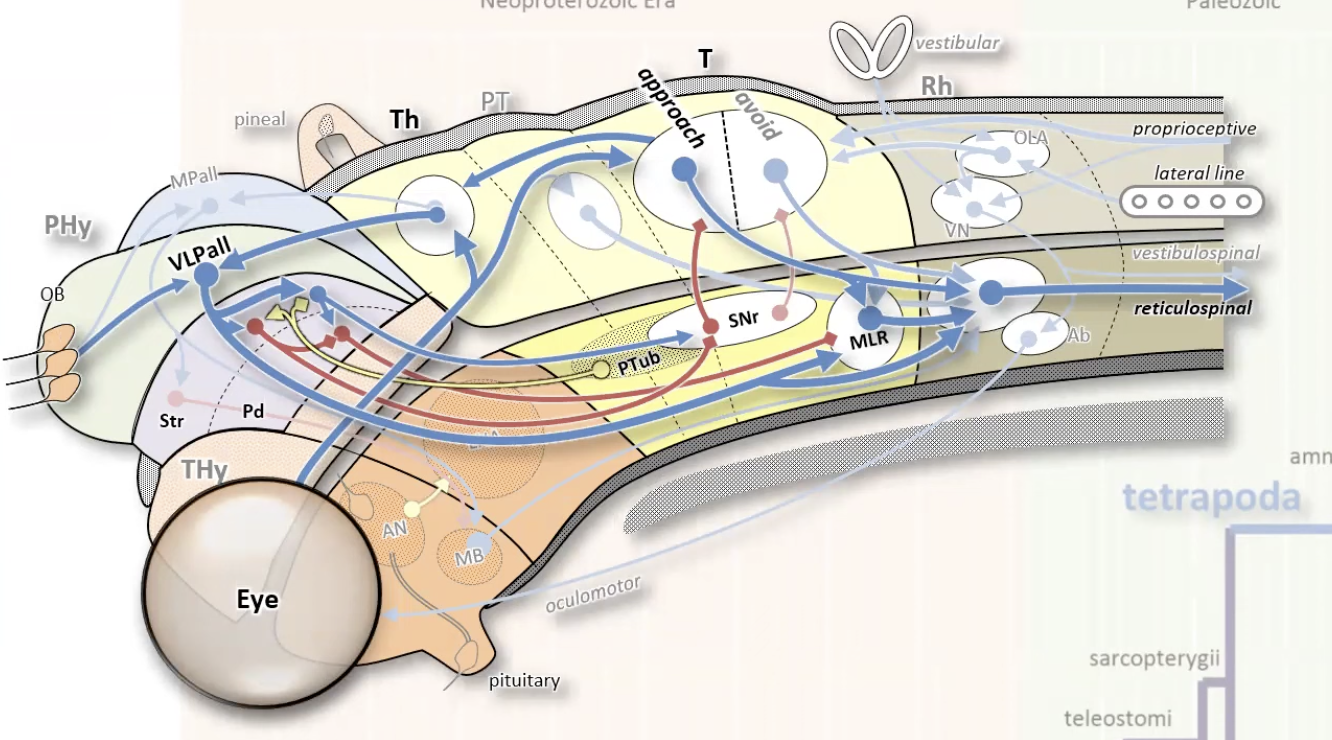
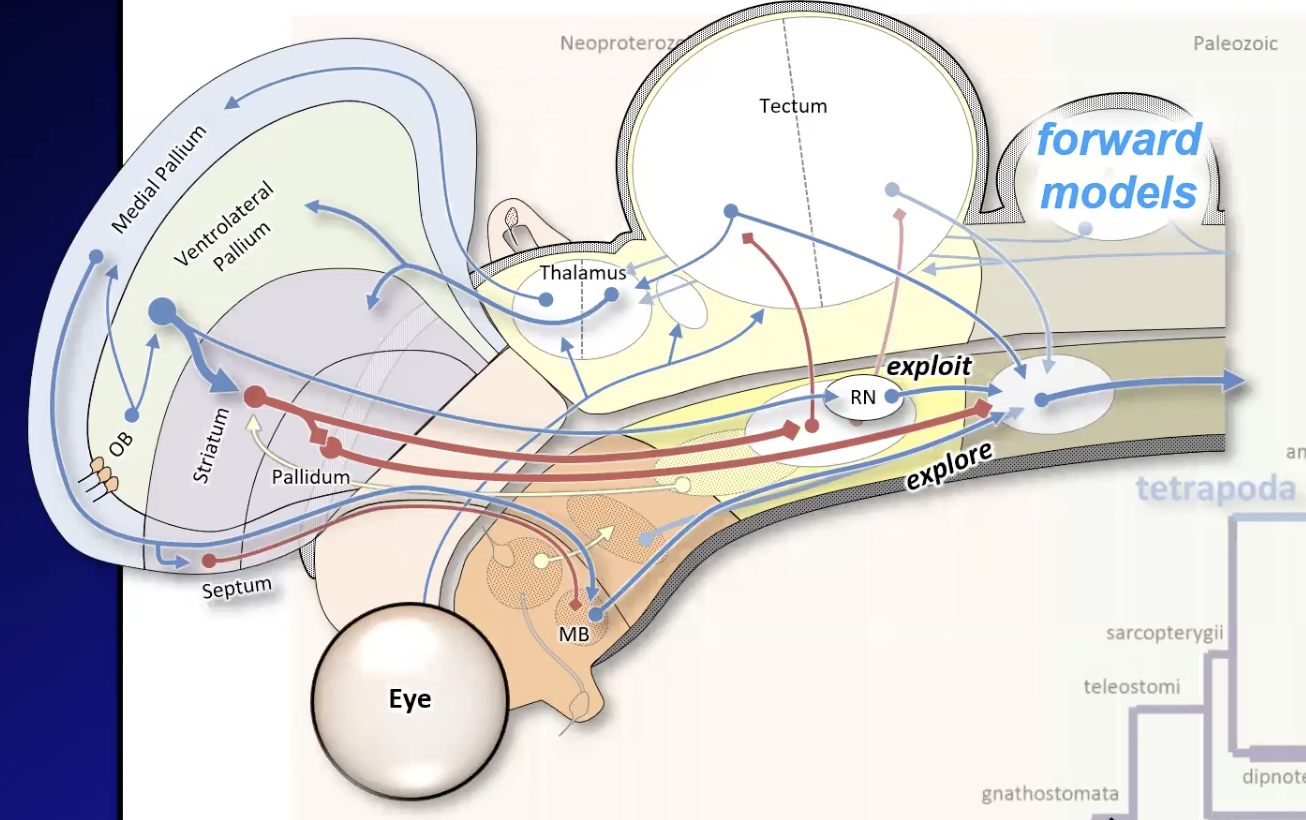
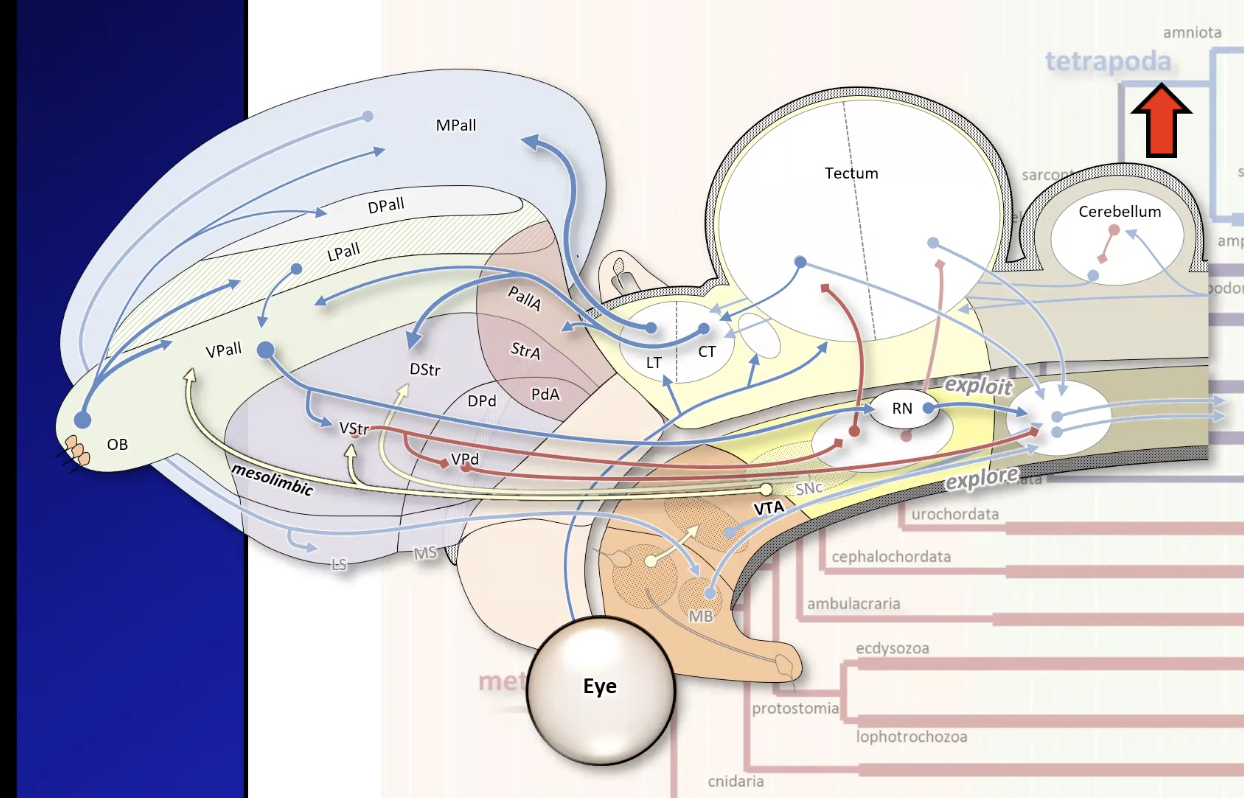
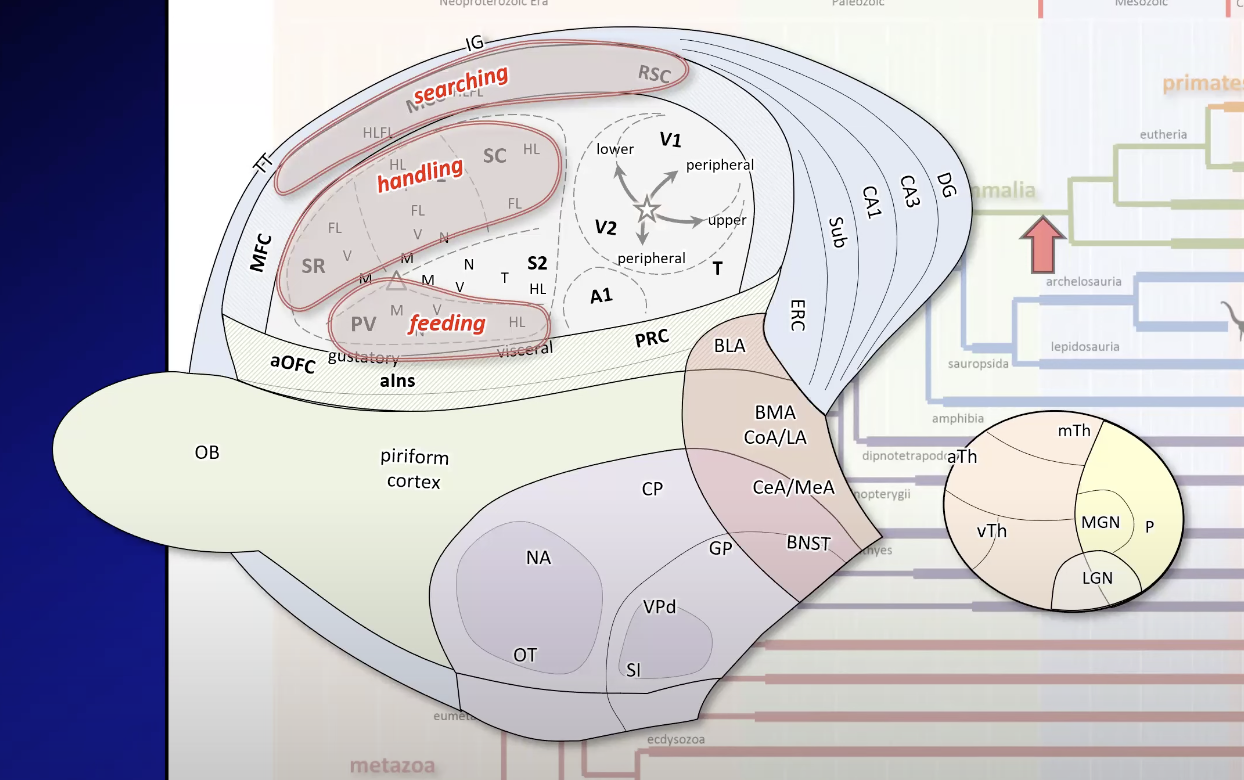
In this week’s workgroup, we discussed Paul Cisek’s talk on the evolution of the brain. He highlighted that each brain module is involved in multiple tasks. Given the brain’s distributed representations and parallel processes, Cisek suggests that studying individual concepts like “decision-making” or “planning” may be impractical.
Viewing the brain as a feedback control system and exploring how specific regions have evolved over time, we can better understand the developmental reasons behind their current functions. For example, this perspective can explain the contralateral organisation of the brain hemispheres and why they operate the way they do.
If primate brains evolved similar to human brains, what accounts for the greater intelligence seen in humans?
In their 2005 paper, Gerhard Roth and Ursula Dicke note an observable correlation between intelligence and factors such as the number of cortical neurons, conduction velocity, and the encephalisation quotient.
While the human brain demonstrates the highest information processing capacity, it is not particularly superior in relative brain size compared to other species. Additionally, cognitive abilities such as theory of mind, grammatical language, and imitation have been observed in various non-human species.
Consequently, whether humans possess truly unique cognitive traits remains unresolved.
Additional Source:
Roth, G., & Dicke, U. (2005). Evolution of the brain and intelligence. Trends in Cognitive Sciences, 9(5), 250–257. https://doi.org/10.1016/j.tics.2005.03.005
word count: 195, source: wordcounter.io
evolution of the brain 1.png
evolution of the brain 2.png
evolution of the brain 3.png
evolution of the brain 4.png
evolution of the brain 5.png

see also
Type:
Tags:
Status:
Location:
Created: 19-12-24 21:17